
The Weight of Being Unheard: Closing the Gap in Obesity Care
You've probably been in that room. Maybe you worked up the courage to bring up your weight, and the conversation didn't go the way you'd hoped. Or maybe it came up unexpectedly and left you feeling more discouraged than supported. If that's happened to you, you're far from alone. On World Obesity Day we are sharing Smart Patients’ perspectives on what people with obesity most wish their healthcare providers understood about living with obesity — and why listening may be the most powerful tool in medicine.
Obesity affects more than 40% of American adults. Many people managing their weight say the healthcare system isn't equipped to help them. According to some Smart Patients, the biggest barriers to effective care are ones that rarely show up in clinical guidelines: feeling dismissed, misunderstood, and unsupported.
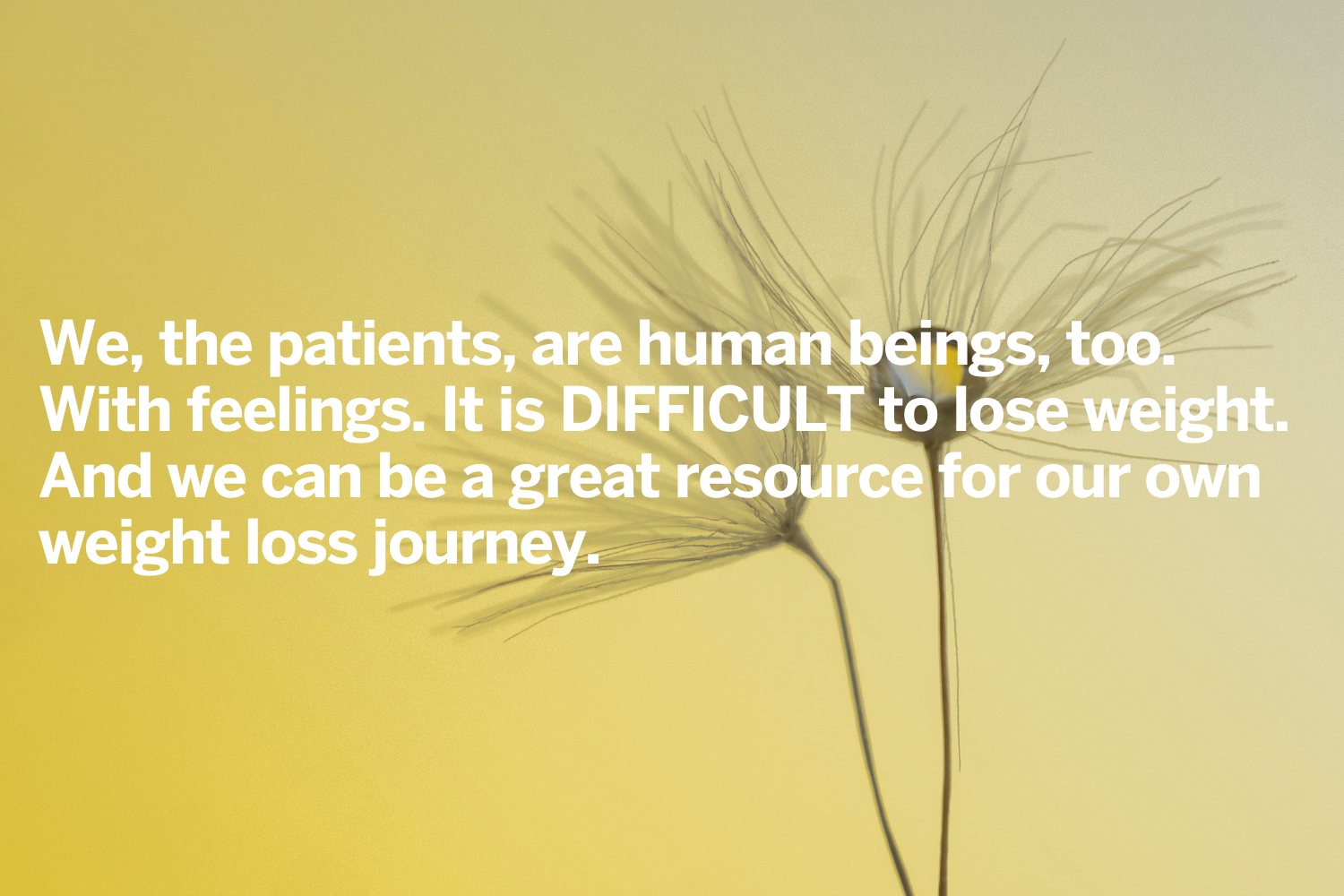
Treat Patients as People First
The most consistent message from our community is simple: they want to be treated with dignity, not data.
Weight is one of the most emotionally loaded subjects a person can bring into an appointment. Many of our members describe it as tied to years of effort, self-judgment, and vulnerability. One shared: "It's a really sore subject for me, and of course I feel lots of guilt and shame around it."
What good care looks like: A moment of genuine acknowledgment before diving into advice changes everything. Our community suggests starting weight conversations with empathy, asking for permission to discuss it, and validating the emotional difficulty of the journey.
Acknowledging the Effort Patients Have Already Made
“I want them to know that I really have tried to lose weight. I feel on those occasions where I did lose a significant amount of weight, it was totally ignored. Not that I’m looking for a pat on the back (OK, maybe I am a little) but a little encouragement and acknowledgement in the difficulty of losing weight would be appreciated.”
People managing obesity have almost always tried — often repeatedly — to lose weight. What they rarely receive is acknowledgment of those efforts.
Members also describe the opposite problem — raising their weight as a genuine concern and being told "you're not that bad." Meant kindly, but it lands as dismissal at the very moment someone has finally said something out loud.
What good care looks like: Small acknowledgments of effort and progress, however incremental, can be the difference between a patient who stays engaged in their care and one who stops trying. Our community suggests that if a patient raises weight as a concern, engage in the conversation instead of dismissing it.
Look Beyond Behavior to Understand Root Causes
Smart Patients have a sophisticated understanding of their own health. Many know that their weight challenges aren't simply the result of poor choices. Challenges stem from medications, underlying conditions, hormonal factors, or other medical complexities.
One member with multiple myeloma gained weight as a direct side effect of her cancer treatment. Another had to bring in before photos to help her doctor connect the dots between her medication and her weight changes. Sometimes it’s hard to be heard across fragmented systems.

What good care looks like: When specialists communicate and share responsibility for the whole patient, these gaps close. Our community suggests investigating the full picture (medications, metabolic factors, hormonal influences, and underlying conditions) and appreciates when the multi-specialty team not only communicates, but shares responsibility for the whole patient.
Recognizing the Real Cost of Eating Well
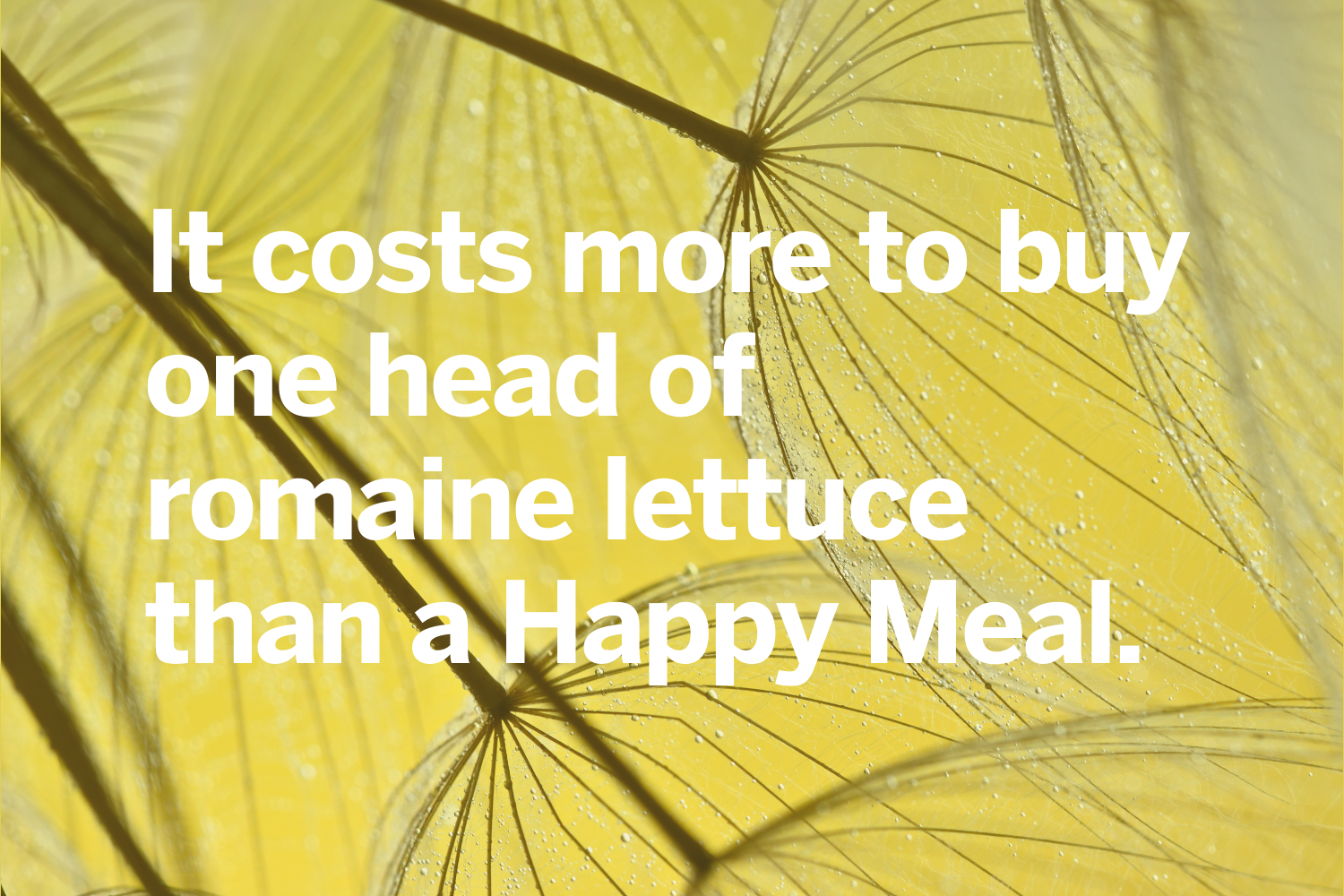
This is the line that stops people. Because it's true, and because it rarely comes up in clinical settings. Many of our members cite the real financial barriers to healthy eating, the cost of weight management programs, and insurance limitations that prevent access to treatments their providers recommend.
What good care looks like: Providers genuinely want to help, but when advice doesn't account for what's actually possible for a given patient, it can unintentionally leave people feeling set up to fail. Asking "what does your situation look like in terms of budget or access?" before making recommendations isn't overstepping. It's care that actually lands.
Shared Goals and True Partnership
Smart Patients consistently say they want a real conversation with their health care providers. They want providers who are curious about what has worked before and who help them build on their own experiences.
Helpful questions that providers can ask include…
What has worked for you before?
What got in the way?
What feels realistic right now?
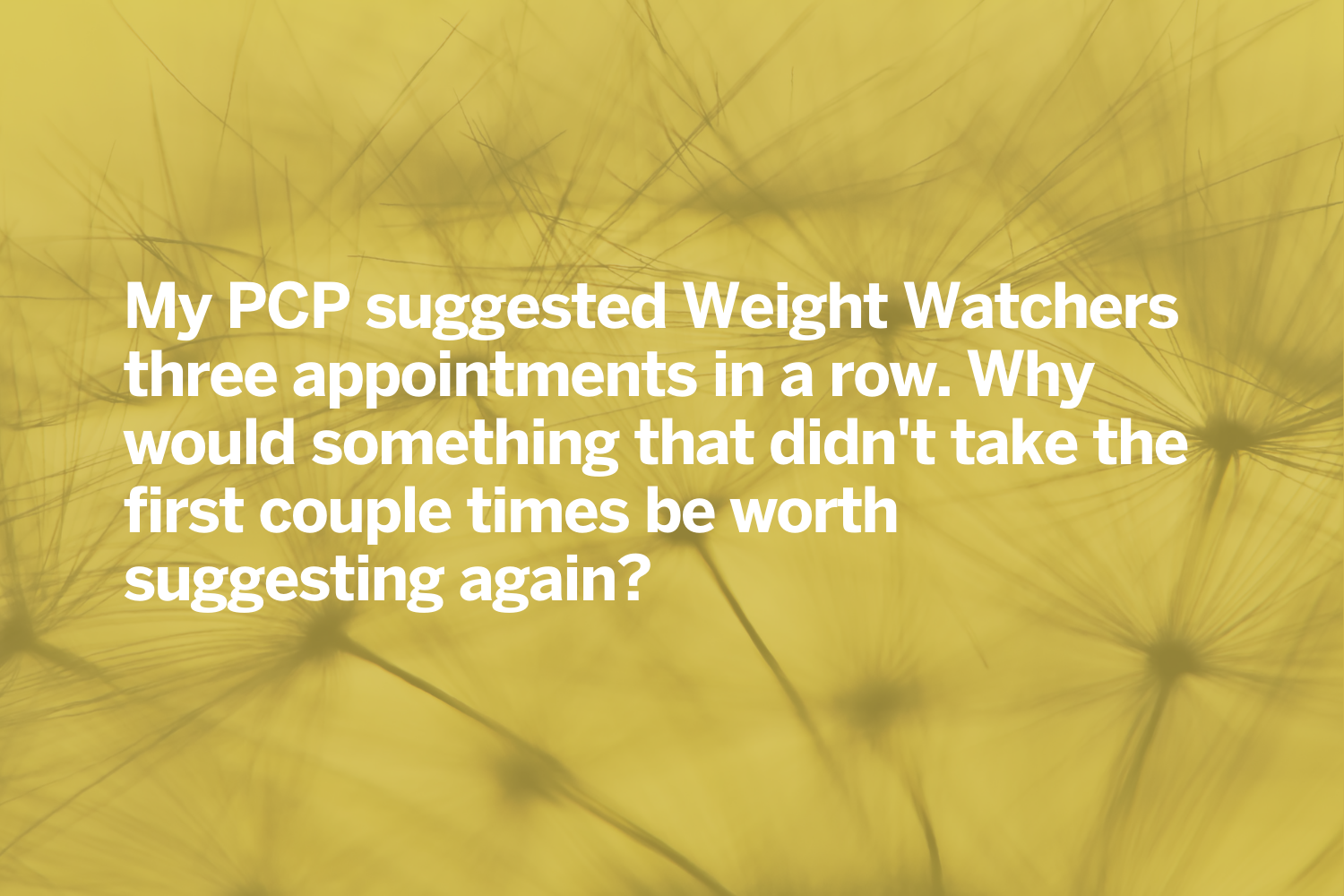
These types of questions create a genuine exchange. When patients hear the same advice appointment after appointment without any acknowledgment of why it hasn't worked, even well-intentioned guidance can start to feel discouraging.
What good care looks like: Treating patients as experts on their own lived experience, then building from there, is what transforms an appointment into a partnership.
A Community That Gets It
The healthcare system is complex, and better care takes time to build. But you don't have to navigate it alone.
Smart Patients' Healthy Weight Community is a place to connect with people who understand what it's really like — the frustrations, the small victories, and everything in between. Come share your experience and help shape what better care can look like.