
Myasthenia Gravis: Why Diagnosis Takes Years and How Patient Data Can Help
A co-authored piece from the Autoimmune Registry (ARI) and Smart Patients. All graphics are based on ARI’s MG Registry Diagnostic Survey Results (as of August 2026).
Why Does It Take So Long to Diagnose Such a Treatable Condition?
Myasthenia gravis (MG) is a chronic autoimmune disease that disrupts the signal between nerve and muscle, producing fluctuating weakness that can blur vision, slur speech, and, when it’s most dangerous, compromise breathing. It affects as many as 100,000 Americans.
By the standards of autoimmune disease, myasthenia gravis is highly treatable; yet the road to its diagnosis often takes more than three years. Roughly half its patients first notice nothing more alarming than a drooping eyelid or a moment of double vision.
These numbers present an objective overview of the disease. However, they do not reflect the toll on patients going untreated while slogging through the long process of getting to a diagnosis.
"3 years, 2 months, and 6 days after my symptoms started, I got confirmation that it was MG."
The precise number of days counted won’t make it into the literature, even though it’s a telling data point. This is why we're writing this article. When you combine the MG data collected by the Autoimmune Registry with the lived experience of Smart Patients members, the diagnostic gap looks less abstract. It becomes something specific, visible, and addressable.
A Diagnosis Measured in Specialists
The first thing the data shows is that an MG diagnosis is rarely the work of one doctor. In ARI's diagnostic survey, MG patients reported an average of more than eight specialist referrals on the way to an answer. Some had seen ten or more physicians before anyone named the disease.
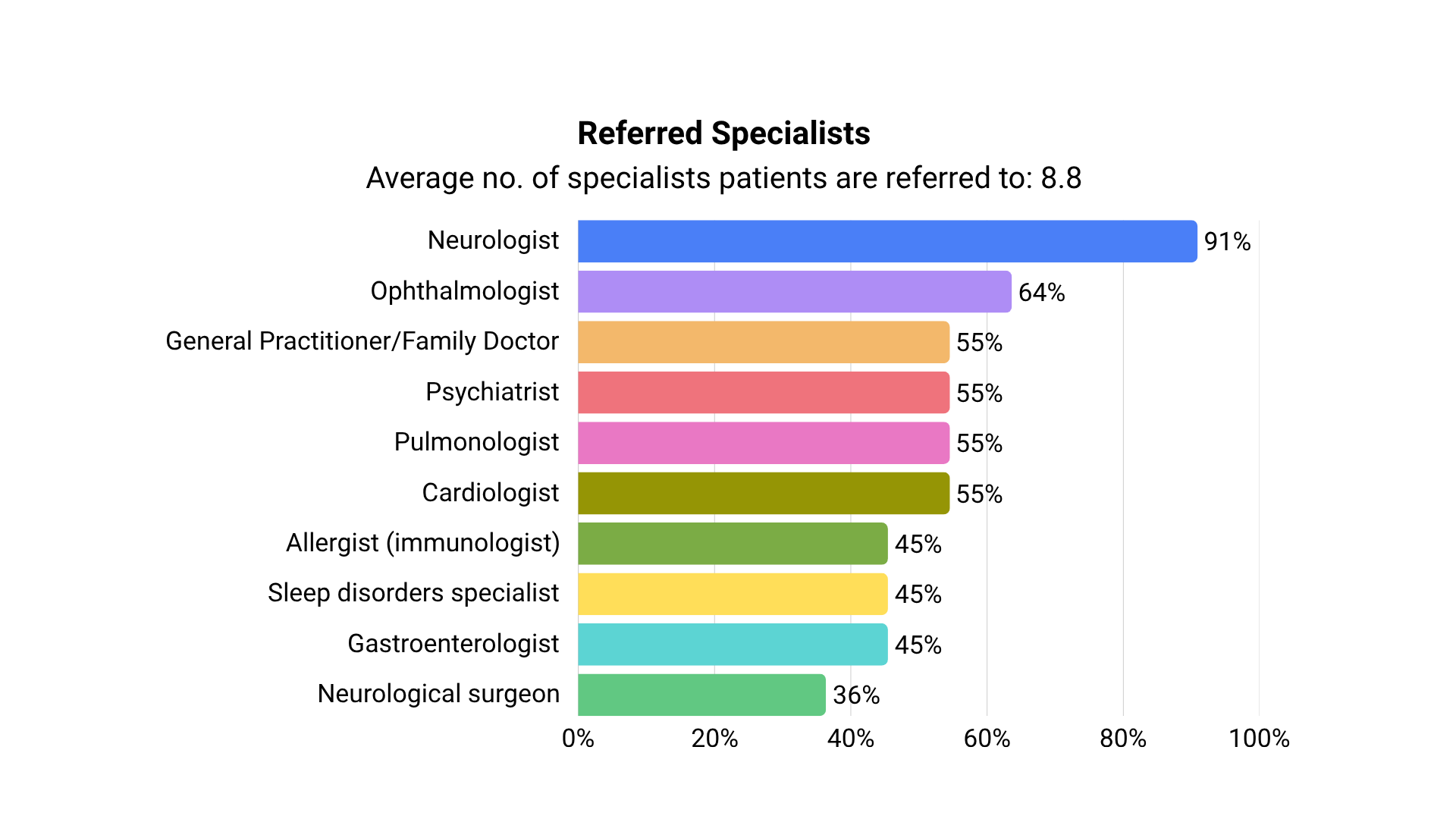
These numbers are similar to what the Smart Patients community describes in its own words:
"6 specialists, including 3 rheumatologists, 2 neurologists, and 1 internist… 3 years now."
The registry counted the referrals. The community explained what it’s like to carry your own file from one waiting room to the next, repeating your history, hoping this is the office that figures out what is going on. The count and the experience are two readings of the same problem.
A Diagnosis Delayed By the Wrong Name
Keep in mind that the referrals are not random detours. They're the trail left by symptoms that often get mislabeled along the way. The same registry survey points to the conditions MG is mistaken for earlier: chronic fatigue syndrome, fibromyalgia, and functional neurological disorder, among others. A patient’s voice highlights how this negatively affected her:
"A neurologist decided I had a 'functional disorder,' despite a classic presentation. I came out of that hospitalization in a walker, with PTSD."
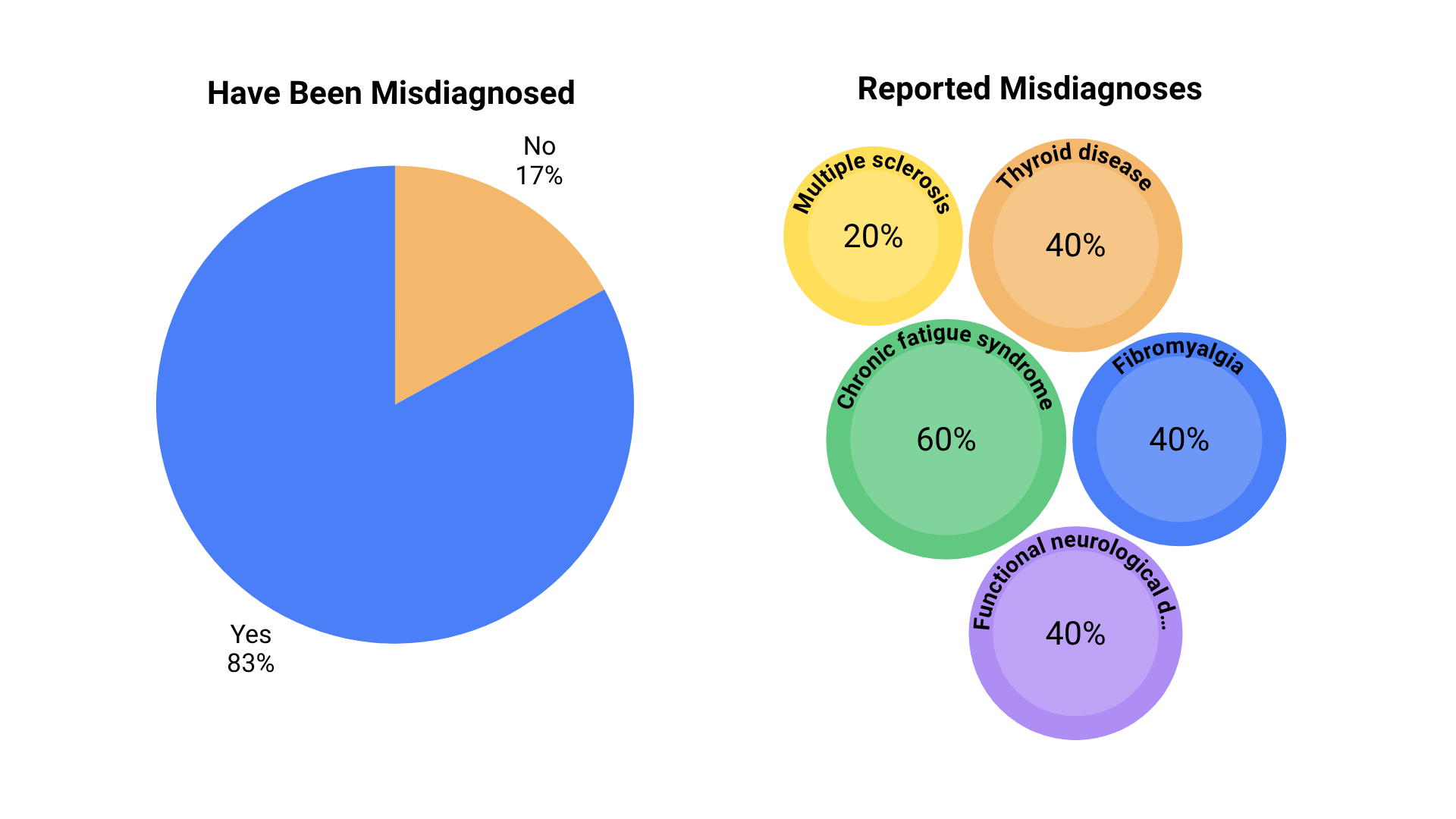
Here’s an example of why the patterns matter. Fibromyalgia appears in the MG registry data twice — once as a misdiagnosis, and again as a genuine comorbidity. That double life is exactly how a diagnostic delay is manufactured: a real, overlapping condition becomes a plausible wrong answer, and the search stops too soon. The mislabeling is not a series of isolated mistakes. It is a structural feature of how a fluctuating, multi-system disease moves through a fragmented system.
MG Rarely Travels Alone
Across registry participants who report MG, the disease almost never appears in isolation. The most common companions are fibromyalgia (18%) and Sjögren's disease (18%), trailing into a long line of other neurological and autoimmune conditions including endometriosis, autoimmune gastritis, vitiligo, type 1 diabetes, and more.
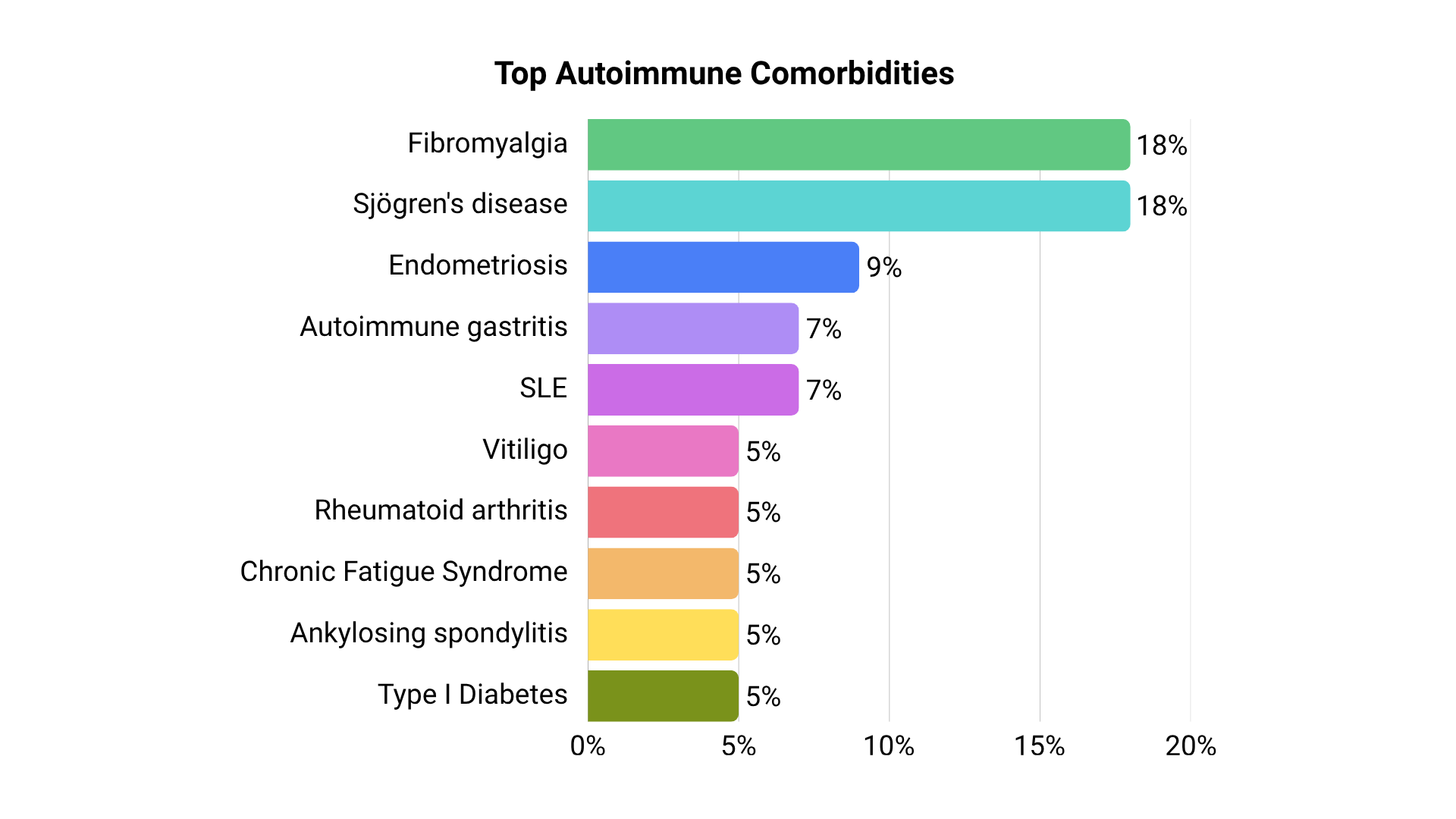
This is the registry doing what only a registry can: showing the shape of comorbidity at a scale no single doctor or clinic ever sees. The community members explain why that shape slows everything down:
"I have MG as well as Sjögren's. Both seronegative, which resulted in long diagnosis delays."
"When my lupus improves, my myasthenia symptoms get much worse."
When a patient already carries one autoimmune diagnosis, new weakness or fatigue is easily folded into the known disease. MG hides behind the label already on the chart. The registry counts the overlap; the community reveals how that overlap becomes a delay. Separately, each is a partial picture. Together, they are an explanation.
The Seronegative Maze
It takes a while to diagnose because the standard model is to order the antibody test, read the result, and rule it in or out. That model doesn't work well for a significant share of MG patients (and for other autoimmune patients too).
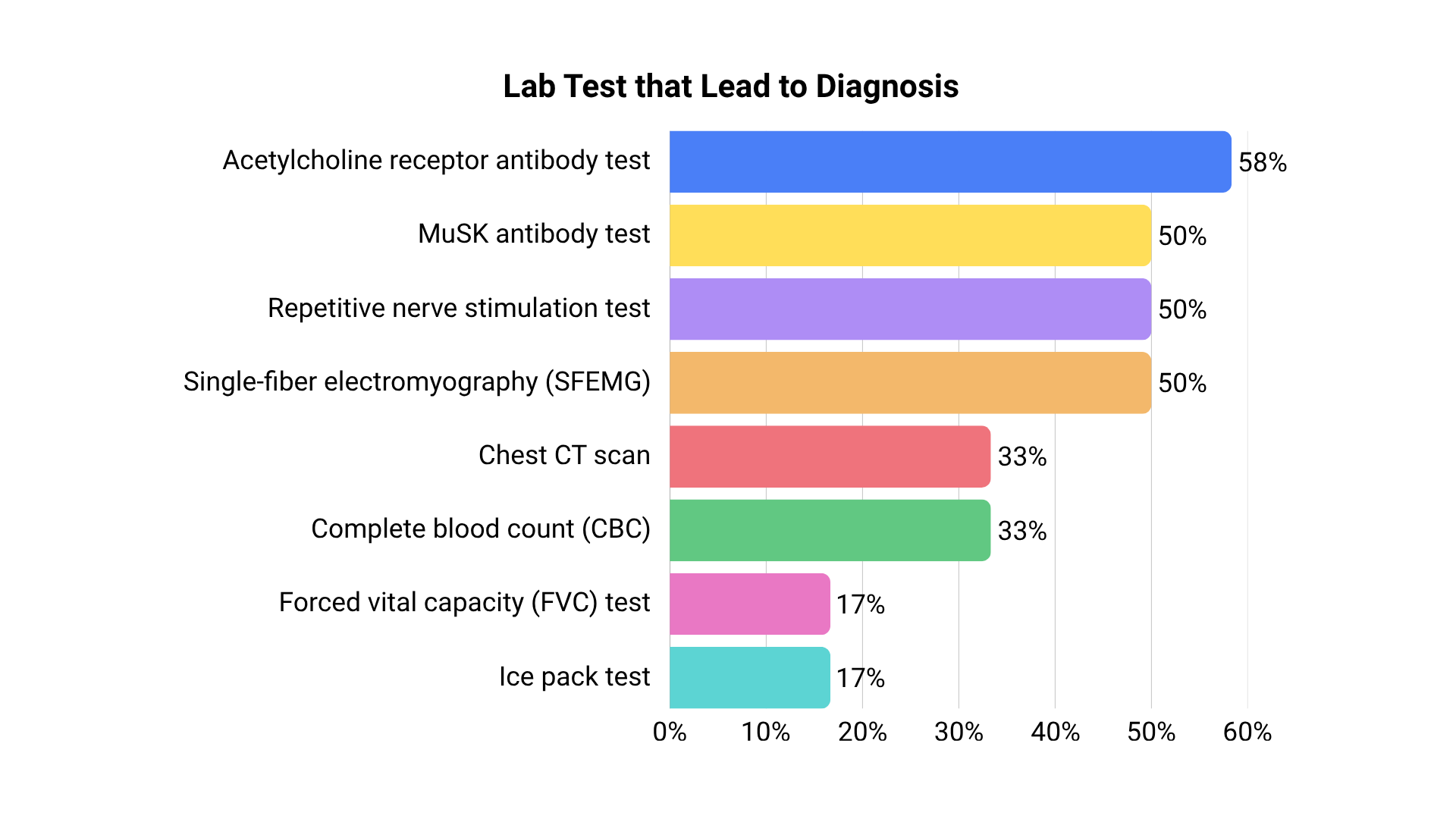
The workup the registry survey describes for MG is this: acetylcholine-receptor antibody testing appears in 58% of cases, and repetitive nerve stimulation testing, single-fiber EMG and MuSK antibody testing each around 50%. Home checks like the ice-pack test also appear in the mix.
What the data cannot convey is how much of this knowledge the community has had to assemble for itself. In Smart Patients conversations, members create their own system for describing what they’ve learned and compare resources and diagnostic tools.
Here’s a sample of what they’ve compiled based on their experiences: a negative antibody test does not rule out MG; single-fiber EMG is the gold standard, but few specialists are qualified to perform it; a trial of pyridostigmine that relieves symptoms is itself a clue; even a cold exam room can mask the weakness a doctor is looking for. One member put the core lesson plainly:
"My antibodies are negative, but my single-fiber EMG was abnormal."
In sum, seronegativity is why the referrals pile up, and the wrong names stick.
The partnership between ARI and Smart Patients helps quantify which tests lead to diagnosis and can help both doctors and patients manage getting a correct diagnosis faster. Combining community and registry knowledge help reveal and structure evidence that could reduce the years in limbo for a newly-symptomatic patient.
Why the Gap is Worth Closing Now
MG is treatable. The last decade has changed outcomes for MG patients. FcRn blockers and complement inhibitors reduce the antibodies driving the disease. Just late last year, the approval of inebilizumab (Uplizna) offered the prospect of long-term control from just two doses a year after the loading doses. That's the hope a patient hears when the possibility is first raised:
"If it's MG, maybe there will be a glimmer of hope with some medication to help."
However, these better treatments only help patients who have been correctly diagnosed. Every year a patient loses in the maze is a year when effective therapy could have been provided. Closing that gap is the most consequential thing left to do.
Bringing It All Together
This is what two patient organizations can do by working with each other instead of just alongside each other. Smart Patients brings patients and their family members together to reveal the lived pattern and share what they have learned. ARI provides firm numbers for evidence: comorbidity rates, referral counts, the tests that actually lead to answers. All this flows back to patients deciding what to do next to find out if they actually have the disease, and to do it faster and more efficiently. It flows to neurologists, rheumatologists, primary care physicians, and ophthalmologists to help them catch MG sooner. Each feeds the other, getting more patients the correct diagnosis and more doctors able to provide it with greater speed and accuracy.
That valuable feedback loop extends beyond MG. A registry tells you what is happening across many people. A community brings those people together to tell you what it is in their own words. Together, they generate patient insight and evidence that help researchers, clinicians, and drug developers deliver better healthcare.
If you have MG or any autoimmune disease, consider adding your experience to the Autoimmune Registry's diagnostic surveys. The data you contribute helps researchers identify patterns, track outcomes, and accelerate the path to faster diagnosis and better treatment.