
Meet Pete: The Man Who Keeps Showing Up
Pete Ramsey was playing golf with his brother in Scottsdale when he knew something was terribly wrong. Despite being an active 58 year old, he could barely walk. The journey through x-rays and physical therapy to an MRI eventually led to a phone call from his primary care doctor: “You have two herniated discs. But that’s not what we’re focusing on today. You have a baseball-sized mass in your right kidney and a similar sized mass in your right pelvis. You have Stage 4 cancer.”
You’d think that would be the start of his cancer story. But actually, it starts with his wife.
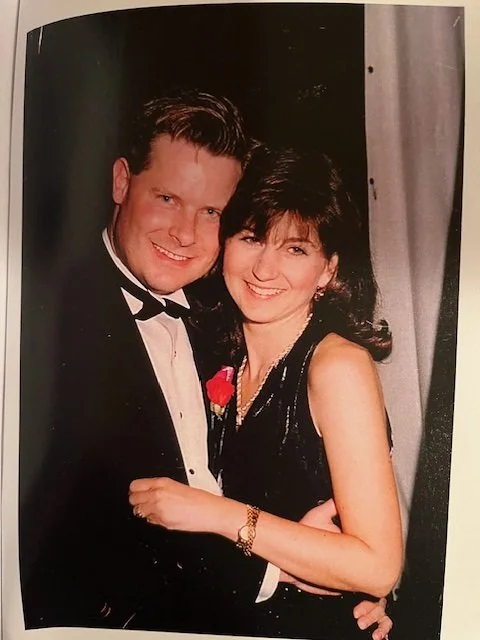
Pete and Sally
She Set the Bar
One night when his wife Sally was 30, Pete woke up beside her while she was having a grand mal seizure. The EMTs came, and off they all went to the hospital. She’d had a miscarriage the day before and thought perhaps the two were connected. They weren’t. Her CT scan revealed a grapefruit-sized mass in her brain.
Opinions from doctors were, as Pete describes them, “all over the board.” A couple of surgeons suggested it was a liquid-filled cyst and a relatively routine surgery would resolve the issue completely. They selected a younger surgeon who was certain it was a brain tumor. He said that it was slow growing, and that the brain adapted to the tumor which is why Sally had no symptoms until the pressure was so great that it resulted in the seizure. At the time, he performed about 200 brain surgeries per year. He promised to do two things: remove as much of the tumor as possible and preserve as many of her functions as possible. He also told them the tumor would grow back, but they could keep track and treat it. She had four surgeries in all plus radiation, chemotherapy, and gamma knife treatment. Options were very limited 35 years ago and oncologists had not yet figured out how to get the medicines across the blood-brain barrier to the tumor.
At the time, their children were five and three years old. His wife wanted another baby. Pete supported her completely. She dove into every book and medical resource she could find — this was the library era, long before the internet — and methodically rebuilt her endocrine system through research and discipline. It worked. She delivered a healthy daughter and when they returned to the oncology ward to introduce her, they experienced a moment so rare and joyful that Pete compares it to the birth of Simba in The Lion King: everyone in the ward glowing with something that felt like a miracle.
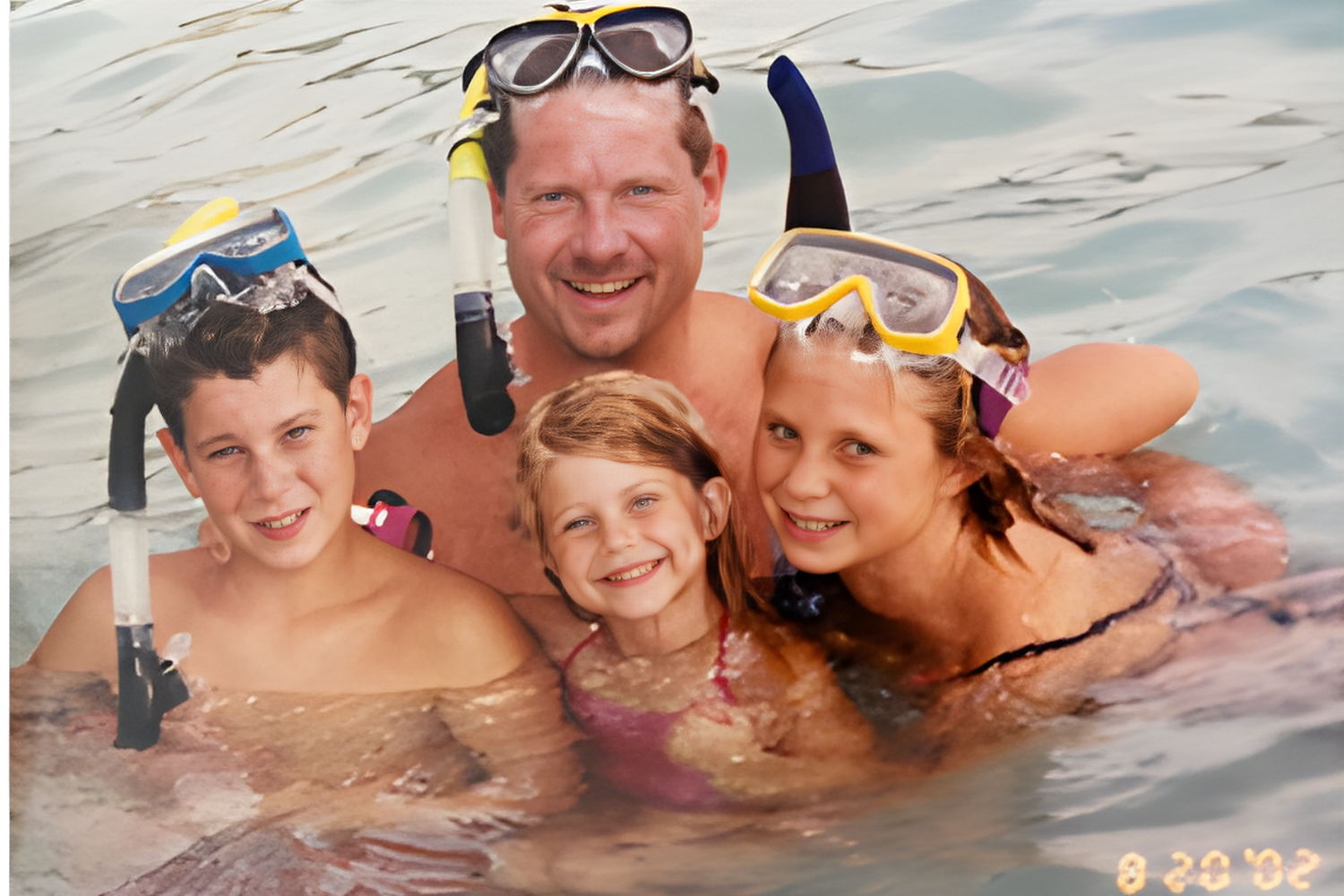
Pete’s wife, despite dealing with ever-present headaches, regular seizures, and many other side effects, he says, was heroic. Sally was a great wife and a fantastic mother. When their youngest daughter was three, Sally lost her battle with glioblastoma. Pete became a single father to her, and her 11- and 13-year-old brother and sister. He speaks with deep gratitude about the community that held all of them up during that time right through to the present.
His wife’s story lives on in their home — literally. A close friend wrote and published a book about her, and it sits on Pete’s coffee table. He reads it every few months. It reminds him of her grace and gives him the kind of inspiration that doesn’t come from anywhere else.
Stage 4, and What Comes Next
Back to Pete’s own diagnosis, which was immediate and severe. Surgeons performed a nephrectomy and he was home the next day. He reflected, “That was the easy part.”
What followed was anything but easy. Imaging revealed the cancer had silently consumed his iliac bone, and his entire pelvic structure was gone. Surgeons did their best to excise what remained and reconstruct the area with using what Pete describes with dry humor as “plenty of plexiglass and rebar” (actually, it consists of four 8-inch stainless steel threaded rods and bone cement). When he came out of surgery, the doctors told him he might never walk without a limp, run, jump, or play golf again.
Pete thought, “I’m 58, so I’m okay with not running and jumping.” But golf? He was going to play golf again.
After a week in the hospital he returned home to a hospital bed in his family room, overdid it, and had a setback by breaking his pelvis. Meanwhile, he moved forward by asking for options beyond the standard of care. His first treatment turned out to be a late stage clinical trial for an immunotherapy combination that showed promise of becoming the new first-line standard of care for kidney cancer. He had six infusions. The cancer engulfed his reconstructed pelvis anyway.
Pete’s response to that news was the same as it always is: “What’s next?” He moved to targeted drug therapy with high-dose radiation. The side effects were brutal, but he kept working. The cancer, as Pete puts it, “is so smart” — it eventually found a way through again. He relied on standard FDA-approved treatments for four years before turning back to clinical trials.
Last fall he enrolled in a new trial. Three months in, the clinical research oncology team delivered the news: it wasn’t working.
The Gift of Feeling Well
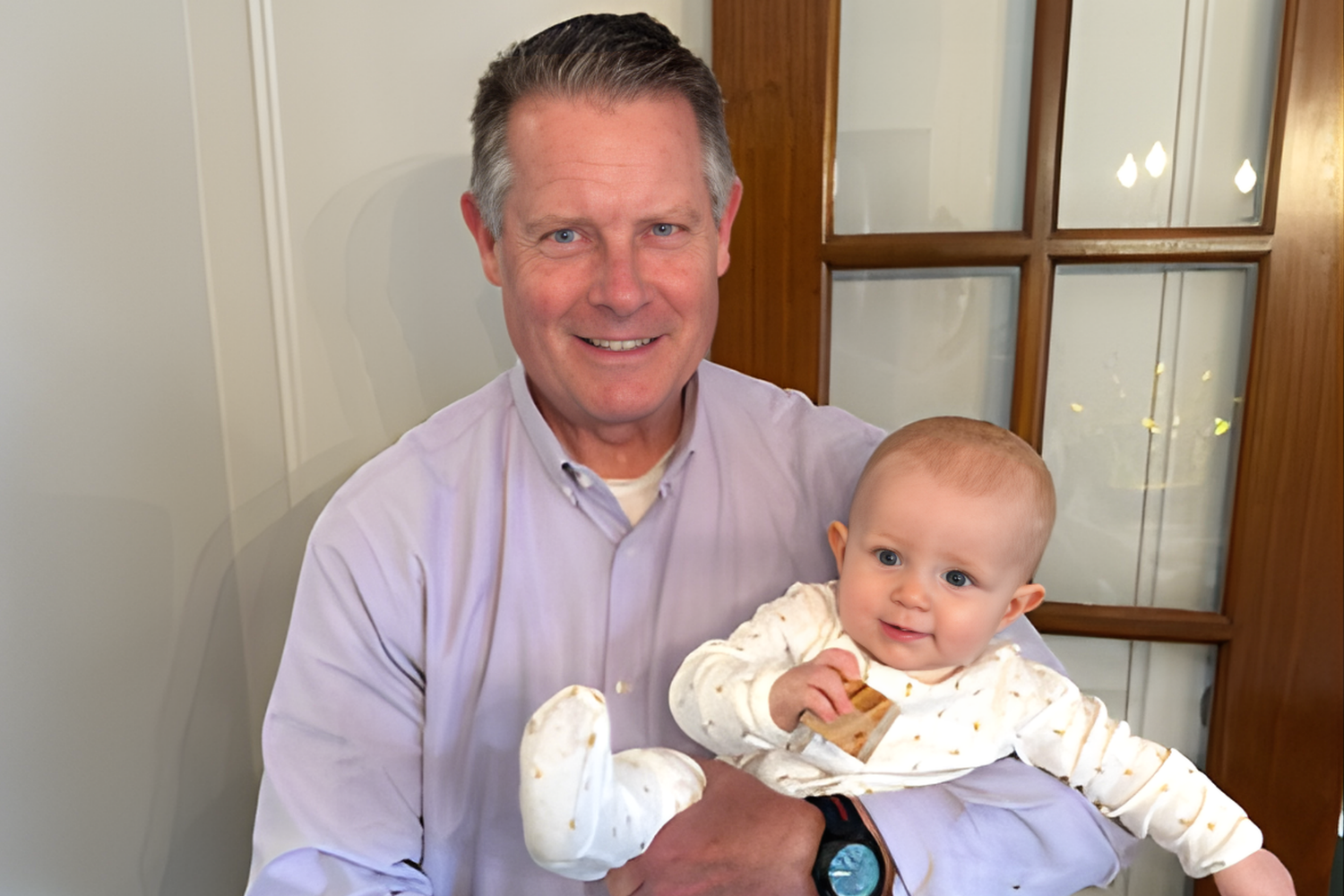
Three months after that conversation, Pete is doing something unexpected: thriving.
Off treatment, the side effects that had made daily life an ordeal are gone. He says he’s been more productive at work and after hours than he’s been in eight years. He’s cooking and serving meals at local homeless shelters. He’s volunteering for mission work at his church. He’s advocating with KidneyCan to encourage more funding for kidney cancer research. He’s going to his alma mater’s basketball games. He’s spending time with his granddaughters in the unhurried, fully-present way that illness had been stealing from him.
He is also, characteristically, not just waiting. He’s first on the waiting list for a new clinical trial, and he’s already connected with another Smart Patients member in Los Angeles who has participated in it for six weeks. Half that man’s cancer has already vanished. The two have become fast friends and virtual pen pals, trading questions, updates, and the kind of candid information that only someone living through the same thing can offer.
Helping Everyone Else
What is most striking about Pete isn’t the medical timeline, remarkable as it is. It’s that when he finishes telling you about his own struggle, he immediately turns to the people around him.
His daughters and their families live nearby and rally around him. His parents, now in their late eighties, look forward to his weekly visits: He brings them meals, helps with their technology, sits with them. His son lives in Florida and he surprised him for his birthday with a visit— just because he felt well enough to show up. He didn’t know Pete was coming until he was at the door.
He shows up for his business partner and best friend whose wife is also battling glioblastoma. He shows up for others in the Smart Patients community who are navigating the same roads he has traveled. He does it not out of obligation, but because it seems to be simply how Pete is built — oriented outward, toward others, as soon as he can help.
It’s hard not to notice, looking at Pete’s life, that something seems to move in his favor at the critical moments: A clinical trial appears just when standard care runs out. A stranger in LA happens to be six weeks ahead of him on the same trial. A door opens, and Pete wastes no time making a connection. It’s as if his years of giving so generously to others has created a kind of invisible net to catch him when needed.
His biggest worry, he’ll tell you, is whether his children and grandchildren carry a genetic predisposition to cancer — and whether it’s “too early to test.” He wants them to live their lives freely, unburdened. And yet, without anyone asking them to, his children have all chosen to be there for him. That, perhaps more than anything, says something about the kind of man Pete Ramsey is.
He wants to be, as he puts it, “the tail at the end of the curve.” The outlier. The one who keeps going. We’re betting on him.
Best of luck as you start that next trial, Pete!