Life Is Good: Eighteen Years of Knowing It
(This article follows Canadian English spelling conventions because K is proudly Canadian.)
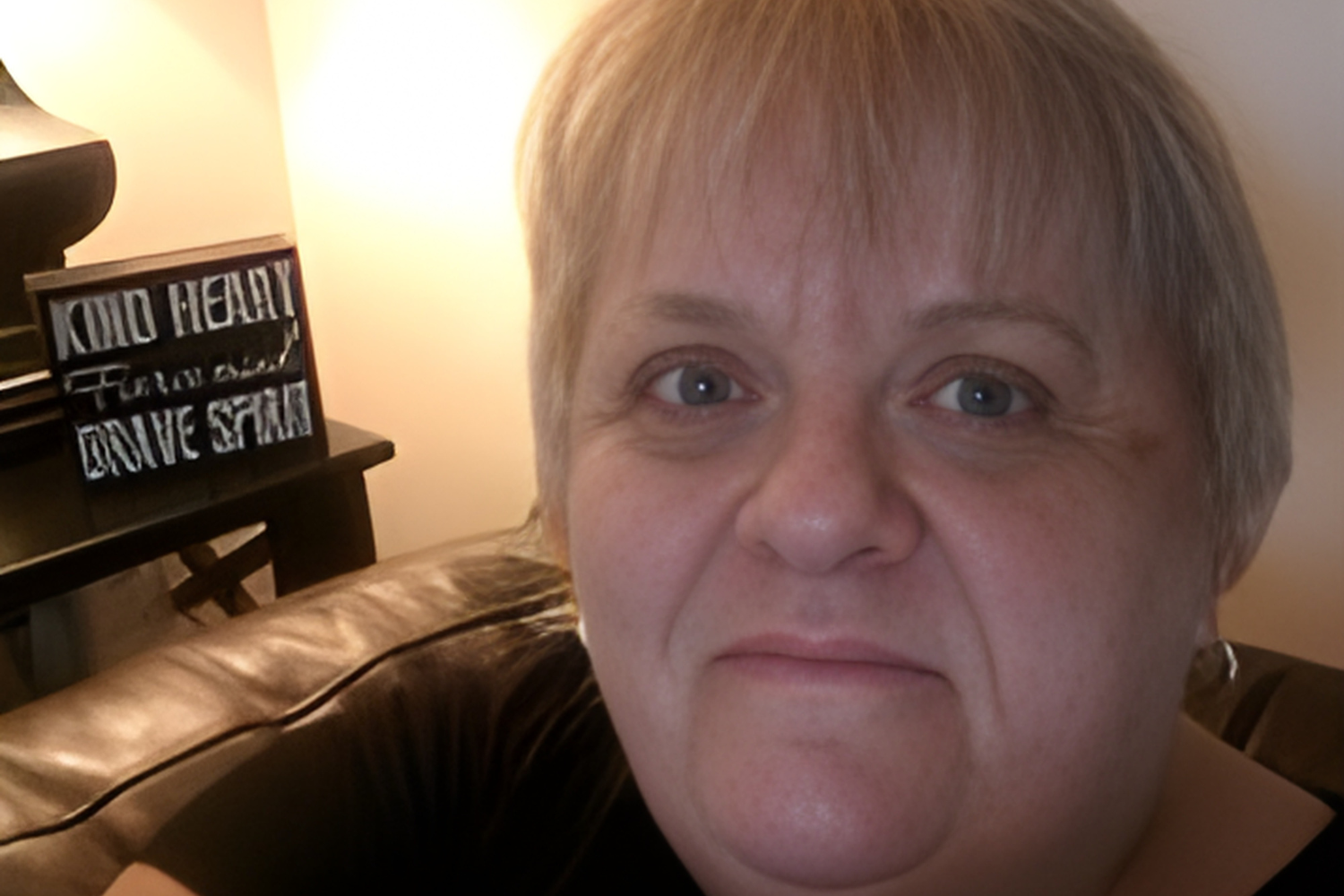
K answered our call while sipping her second coffee of the morning. She had gone to bed late. “Retired life,” she says with satisfaction. It’s also a great sports season that keeps her up. It’s been hard to decide how to watch hockey, the Blue Jays, golf, tennis, and curling all in one day.
She is warm and unhurried and very funny. She is also one of the longer-standing members of the Smart Patients community – diagnosed with Stage 3 clear cell kidney cancer in 2008 when she was 51. “Sometimes I feel like my story has been told,” she says. In our Smart Patients community, “Most people know it. But unfortunately, new people keep joining.” So K keeps showing up and sharing it.
Cut It Out
K describes herself as a “cut it out and get rid of this” kind of woman. When the 15cm tumour in her left kidney was found, she wanted it gone – so she had a radical open nephrectomy. Her surgeon spent extra hours delicately dissecting its tentacles from her ovary, to spare it.
A month later, a scan found a tumour in that same ovary. The surgeon suggested that they watch and wait because it was small in size. But knowing how quickly it had grown in just 30 days, K said to him, “You saved it. Now get it out. In fact, let’s just get rid of both ovaries while you're there.” Ovaries weren't his thing as a urologist, so he laughed; but his kindness and caring nature overcame him, and he agreed.
With no visible metastases after the surgeries, K decided to be proactive. It had frightened her how quickly that tumour grew. She wanted to prevent any further tumours and also contribute to science, so she enrolled in the ASSURE trial. This was a double blind plus placebo adjuvant study aimed at preventing or delaying recurrence. She had less than a month to complete all the required testing – stress test, MRIs, CTs – and get started right before the Christmas holiday.
Two Days
On December 23, K received her trial medication at the cancer clinic. Within 48 hours she lost her sense of taste, developed severe heartburn, and had stomach issues. She knew immediately she didn’t have the placebo.
The “onc on call” that holiday weekend prescribed an antacid. K read the side effects carefully. She was already on blood pressure medication. Many of her female relatives had died of heart disease. Her sister had had a stroke. The antacid could raise blood pressure, so K called the hospital again to explain her concerns. The on-call doctor said to stop the trial medication for now. He left a message for her oncologist, Dr. R, to restart it after the holiday break.
When Dr. R saw her in early January, they talked through everything. She was ready to resume the trial. Her oncologist left the room to get the medication and returned after fifteen minutes. “Bad news," he said. You can no longer take the trial drug.” The protocol allowed a maximum gap before restarting, and they were two days past it. Just like that, the trial hope was gone.
“I went into shock. Without my knowing, I had lost the only opportunity I had to do something to help fight this cancer that had grown so big and so quickly inside my body.”
The Hole
What followed was unlike anything K had experienced. She fell into a depression so deep and consuming that she describes it as worse than any of the physical ordeals she had been through. She could not sleep or turn her brain off. It made her feel suicidal. For two years she could not find her way out.
She remembers when she was young, watching her mother go through dark periods after K’s father died and thinking then, as teenagers sometimes do: Just snap out of it. She understands now, in her bones, why that’s not how it works.
“With depression, you have no control over it,” she says. “I couldn’t snap out of it. I was diagnosed with PTSD from a lifetime of trauma and then being blindsided – my oncologist left the room to get the medication and came back saying no meds. That broke me.” Counseling and mental health medication slowly helped her to get back to herself.
She still takes the same medication today. It evens things out. Not getting the highest highs seems a fair trade for not getting the lowest lows.
She continues to advocate for clinical trials despite her initial experience, but she has a clear and pointed message for those just starting a trial: know the protocol yourself. Don’t assume the doctors have every detail memorized. Read the fine print. (She admits she didn’t.) She also learned that participating in a trial can affect eligibility for future trials – something many patients don’t realize. It's important to strategize.
There is one great benefit she extracted from this experience. The ASSURE trial gave her ten years of excellent follow-up care. As it turned out by trial’s end, the drug showed no clinical benefit; but she still says it’s worth it to be a part of clinical trials because the monitoring is exceptional.
And sometimes, in her quieter moments, she finds herself wondering: The meds being taken from me saved me 50 weeks of rough side effects – hmmm, was someone looking out for me?
Chasing Nodules
In 2015 three small spots in her lungs – earlier thought to be old scars from infant whooping cough – began to grow. Her oncologist recommended watching them as they were only 5mm. K pushed for a referral to a thoracic surgeon.
The surgeon confirmed they were too small for needle biopsy; standard of care was to watch them until they reached 1cm. K challenged that path. He then offered, if she was willing, to place a metal marker beside the most accessible one so he could go in surgically, locate it, and take it out to be biopsied. It had risks and sounded terrifying, but she agreed. It turned out to be kidney cancer metastasis.
What followed was a series of four lung surgeries spread over three years, working through different lobes with careful attention to what her lungs could tolerate. The last nodule came out in 2017.
She was again in the clear until 2019, when a new tumour appeared in her remaining kidney. This one frightened her more than any of the others since it was her only kidney. After weighing partial nephrectomy against ablation – and considering the scar tissue from a lifetime of prior abdominal surgeries, including two C-sections and a hysterectomy – she chose ablation. The tumour was 2.8 centimeters. Ablation burned out a 3.4 centimeter area. That was seven years ago. “Touch wood,” she says.
Through all of it, she has managed to stay off systemic medication therapies. That’s been a deliberate choice – a quality-of-life calculation. The surgical recoveries were hard, but between episodes she has had long stretches of good days.
Life Is Good
K turns 69 next month and has been married to B for 44 years. Their two daughters were in college and university when K got the initial news. Now they're both married and live within an hour of them. They’re blessed with six grandchildren.
On her left wrist, to keep near her heart, she has a tattoo that reads “life is good” and with it, cherry blossoms and leaves spread up her arm. Each one represents someone who has been meaningful in her journey: family, friends, doctors, techs, fellow patients, the communities at Kidney Cancer Canada, Smart Patients, the Judy Nicholson Kidney Cancer Foundation, KidneyCAN, and local support groups. With a laugh, she says she hopes it doesn’t grow any longer.
She chose cherry blossoms deliberately because they’re both gentle and strong. In a resilient cycle, they bloom and fall and come back. “Spring is always a good time,” she says, after the brutal Canadian winters.
There is one new weight on her shoulders: B, who has been her caregiver through all of this, was recently diagnosed with Parkinson’s. She is beginning to face what it means to step into that caregiver role for him. It is the first time in a long time that she's allowing herself to think in terms of the months and years ahead; but she doesn't dwell on them.
She doesn’t entirely understand why she’s done as well as she has. She was given a 50/50 chance of a five-year survival back in 2008. She thinks about the friends she’s lost – good people, remarkable people – and she doesn’t have an answer for why she’s still here and they’re not. She’s not particularly religious, but she thinks she must still be here for a purpose. She counts her blessings daily and knows she can deal with whatever comes when it comes. Making each day as stress-free as possible is something she strongly believes fuels her immune system.
To anyone newly diagnosed, she offers this: Never give up hope. Look for new findings and treatment options. When there are tumours, she still believes in "getting it out" if possible; drugs are a bigger assault on quality of life. She also reminds others to know the protocol, ask questions, push where needed, and find your community. And enjoy your moments – that hot cuppa, a walk in the sunshine, your warm comfy bed. The more we can acknowledge gratefulness for these pleasures and treasures, the fuller our life is. She doesn’t let tomorrow’s worries steal today’s joy.
As we wrapped up our call K said: