
For Migraine & Headache Awareness Month, the members of our community speak for themselves.
Tell someone you have a migraine and you often hear, "Oh, I get headaches too." But the people in our community know the difference between a migraine and a bad headache. For many of them it’s a neurological event that can steal a day, a week, or the use of half their body. For others, it travels alongside an autoimmune or chronic illness that took years to untangle.
Here's what “migraine” means to the Smart Patients who live with the pain, the long road to a diagnosis, and the desire to keep going.
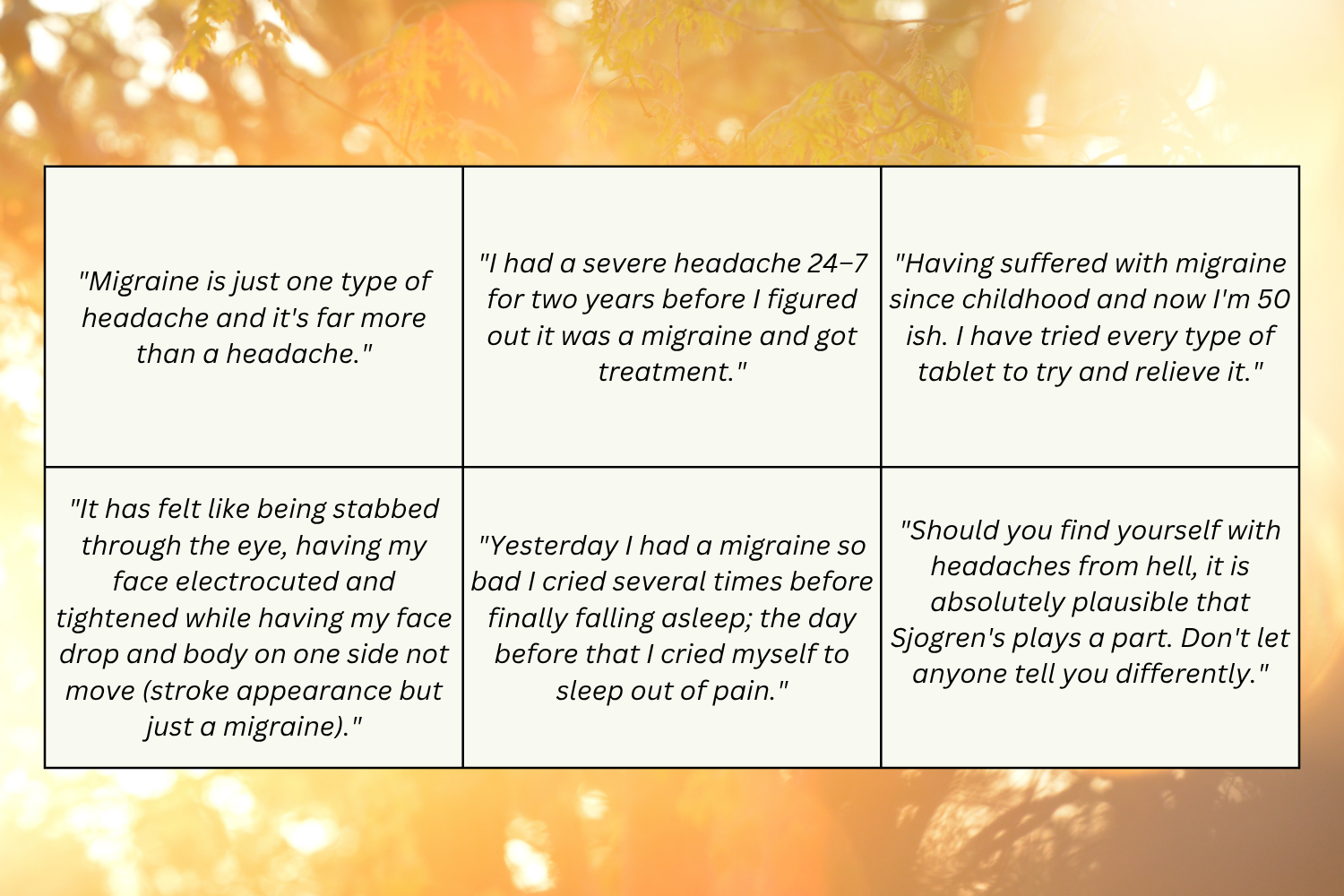
In our conversations, migraine turns up again and again next to autoimmune and chronic disease. Members describe it as a core part of how their illness shows up. Smart Patients counsel each other on how that “headache from hell” is plausibly linked to an underlying disease and how to explain this during an ER visit.
They also discuss how the migraine or headache pain can be connected to why their multiple diagnoses took so long before being named. The migraine subtypes that get missed — hemiplegic, ocular, vestibular — are often first regarded as unrelated only to find out, sometimes years later, that they were important diagnostic factors after all
And then there's the part that's hardest to convey to people who haven't suffered a migraine. It doesn't just hurt. It can lead to crippling fatigue, nausea, vomiting, scrambled speech and balance, a racing heart. Any little light or noise or smell can be agonizing.
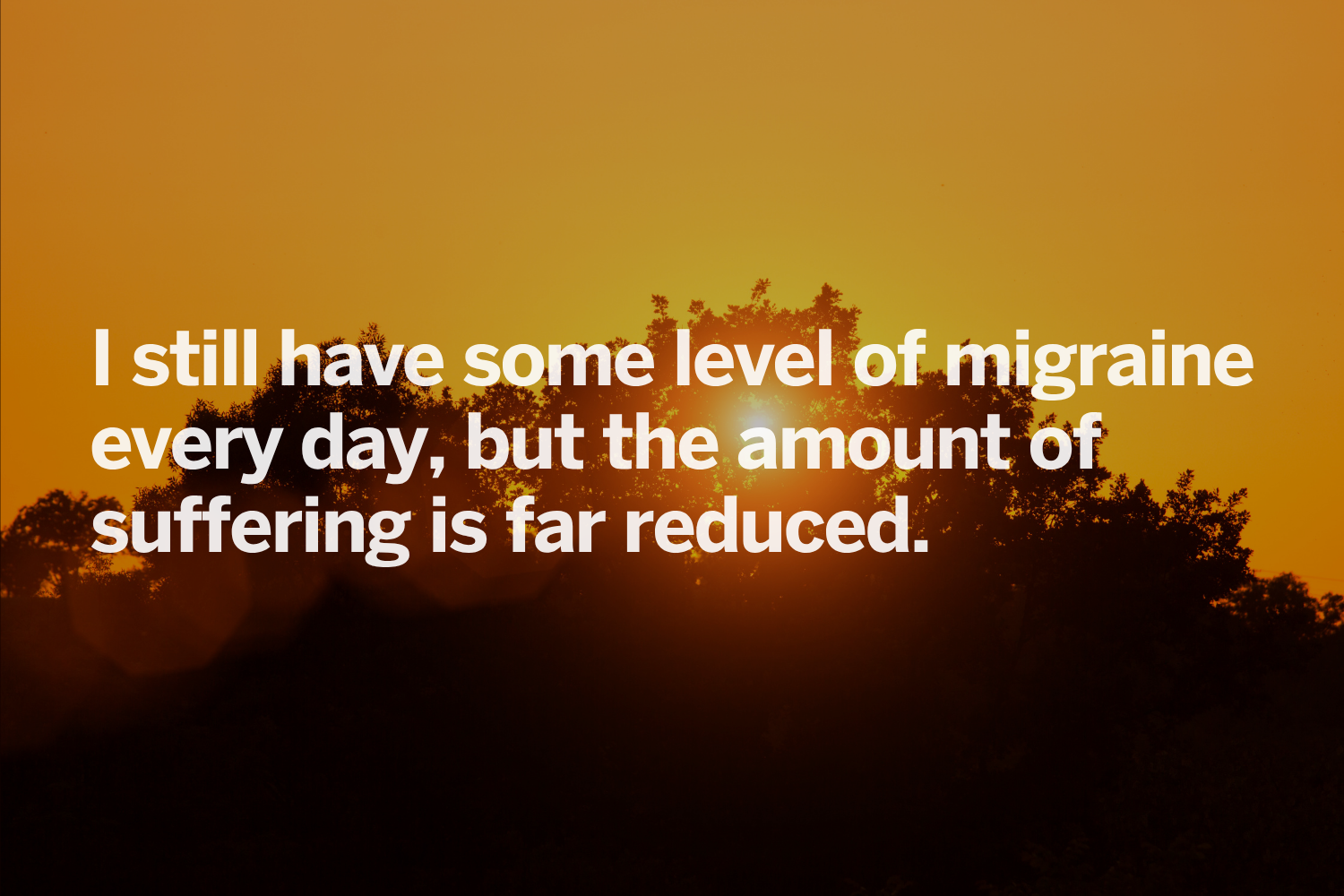
That’s why Smart Patients seek solutions together. They keep trying until they find a way to make it better. They share what they experienced with preventive injections to cut both how often and how hard the attacks land. They describe combinations of medicine that gave them their lives back. They share the truth that no single remedy works for everyone. What does work is persistence, a willing specialist, and a community that listens, shares, and offers feedback.
Everyone's migraine is different. If your headache is new, sudden, or severe, or symptoms like these resonate, talk to a doctor. You can also join Smart Patients to talk to others who understand.