
Every Six Months, Another Scope: Patients and Experts Frame Life with FAP
For people living with familial adenomatous polyposis (FAP), care is rarely defined by a single moment. It accumulates over time — scopes, pathology reports, waiting, repeat decisions — often without a clear explanation of why plans change.
That uncertainty surfaced early in a recent Ask the Expert conversation inside the Smart Patients FAP community.
“Is It Normal to be Called Back in Six Months Instead of a Year?”
A member asked this simple question. Behind it was a deeper concern shared by many people living with FAP:
When surveillance intensifies, does that mean surgery is coming?
This is exactly the moment Ask the Expert sessions are designed for — when clinical care continues, but understanding lags behind. These conversations don’t replace medical advice. They help patients interpret it, regain orientation, and decide what questions to bring back to their care teams.
Over three days, patients and caregivers from around the world engaged with two hereditary cancer specialists — Dr. Jewel Samadder of Mayo Clinic and Dr. Eduardo Vilar-Sanchez of MD Anderson Cancer Center. What emerged wasn’t a checklist, but something more useful: a shared framework for thinking about surveillance, surgery, genetics, and research across a lifetime with FAP.
Surveillance Is a Response — Not a Prediction
For many patients, a shortened surveillance interval feels like a warning. A six-month scope can trigger fears about cancer risk, loss of control, or the inevitability of major surgery.
The experts emphasized a critical distinction: surveillance frequency reflects findings, not fate.
Intervals change based on polyp number, size, histology, location, or the need to reassess complex resections — particularly in the duodenum, where polyps are common and often managed endoscopically for years. More frequent scopes are not a verdict. They are an adaptive strategy.
That clarification mattered. Multiple participants described relief once they understood that tighter surveillance is often about watchfulness, not escalation.
One member, living with FAP for decades, shared how a shorter interval reignited fears of a Whipple procedure — a possibility he described as a growing “mental burden.”
“A Whipple Isn’t Inevitable”
Few words carry as much emotional weight in the FAP community as Whipple. While the operation can be lifesaving, it represents a threshold many patients fear crossing.
The experts were clear: a Whipple is not inevitable for most people with duodenal disease. Surgery enters the conversation when endoscopic management is no longer sufficient — typically at advanced Spigelman stages or with high-grade dysplasia or cancer. These decisions are best made at high-volume hereditary cancer centers, where endoscopic, surgical, and preventive options can be weighed together.
“I’ve had to face up to this being most likely an operation I will need in the near future. I’m afraid and angry at this FAP battle. I’ve never chatted with someone that’s gone through this. I feel kinda isolated, like nobody I know can relate to this.”
One member undergoing scopes every three months due to extensive polyp “carpeting” shared the emotional toll of facing that uncertainty.
That isolation matters. It shapes how people interpret risk — and whether they believe alternatives exist. In response, the experts didn’t offer reassurance alone. They outlined concrete next steps: second opinions, evaluation at experienced centers, and consideration of clinical trials before assuming surgery is the only path forward.
Lifelong Surveillance Means Lifelong Interpretation
Another misconception surfaced repeatedly: that colectomy marks an endpoint.
FAP is lifelong. Surveillance continues for the rectum or pouch, stomach and duodenum, ampulla, thyroid, and sometimes the small bowel and abdominal wall. Intervals change. Findings evolve. Advanced resections often require closer follow-up.
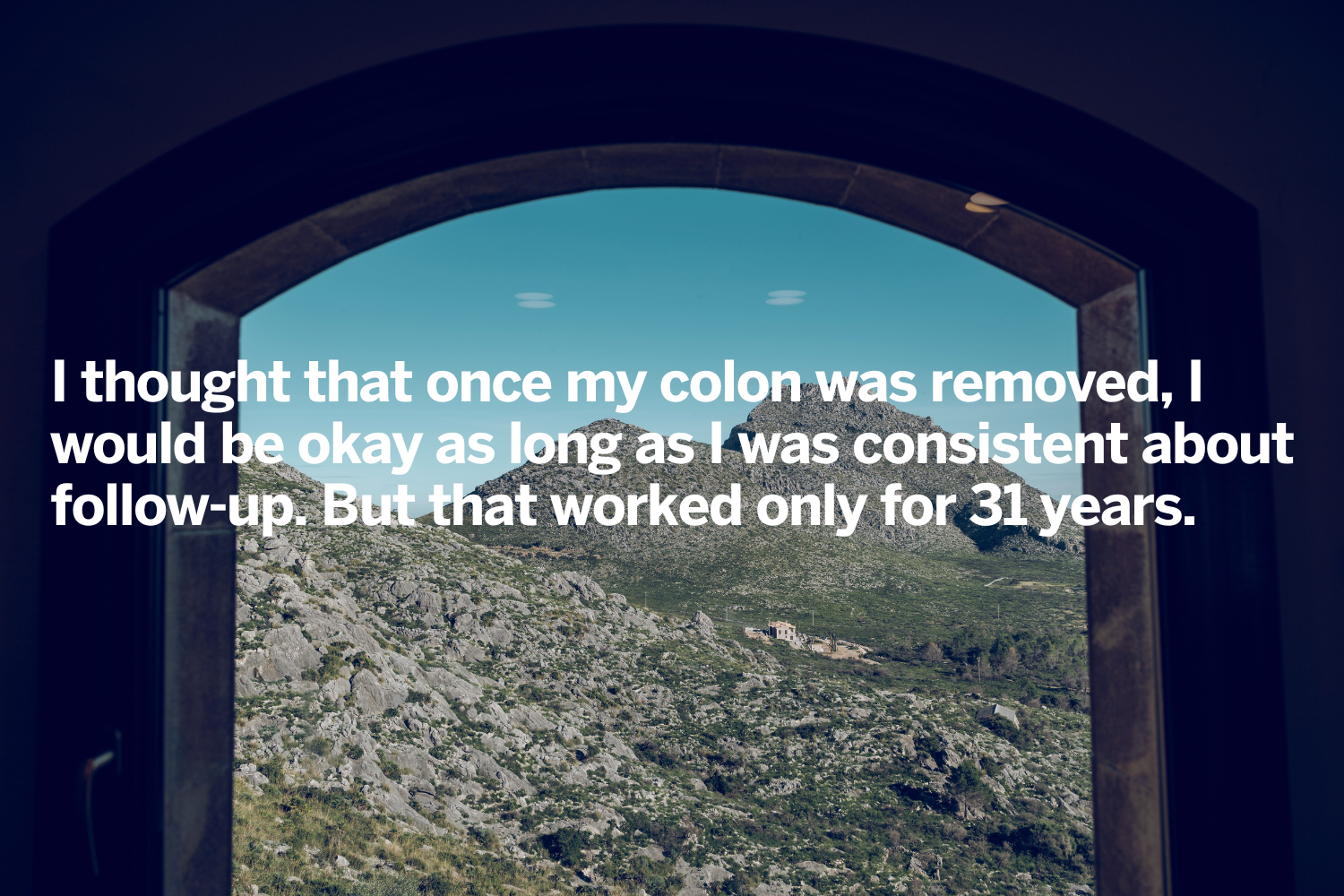
When asked about lifestyle or dietary interventions, the experts were direct. Avoiding smoking and limiting alcohol helps overall risk, but diet alone cannot stop FAP. Trials of supplements such as curcumin have not meaningfully reduced polyp burden. Surveillance remains the foundation of care — demanding, imperfect, and effective.
Genes, Children, and the Question of Testing
Because FAP is autosomal dominant, its impact extends beyond the individual. Each child of an affected parent has a 50% chance of inheriting the condition.
Participants asked when to test children, how to navigate relatives who decline testing, and how to manage uncertainty around genetic variants. The experts emphasized a consistent principle: clinical findings guide care. Genetic confirmation helps tailor surveillance, but polyposis itself requires action.
Testing around ages 10–12 allows surveillance to begin when it matters most. Without testing, families often carry a heavier burden of precautionary procedures and unanswered questions.
Clinical Trials and the Search for Chemoprevention
“The only way we are going to find effective treatments for FAP is through clinical trials, including research into chemoprevention and immunoprevention aimed at reducing polyp development earlier.”
Surveillance and surgery define current care. Clinical trials shape what may come next.
Yet many participants had never discussed trials with their clinicians or assumed access required special referrals. During the session, trials shifted from an abstraction to a realistic option — something patients could explore, question, and weigh alongside standard care.
International participants raised additional barriers — geography, cost, insurance — prompting discussion of expert consultations, European centers, and emerging hybrid models that reduce travel burden.
Why Our Ask the Expert Sessions Matter
This conversation did not eliminate uncertainty. But it made uncertainty navigable. Insights from these conversations inform patient education, trial readiness, and shared decision-making across the FAP care continuum.
Patients left with clearer mental models for:
Why surveillance changes
When surgery enters the conversation
How genetic testing informs care
Where clinical trials fit into real-world decision-making
Just as importantly, they heard their private fears echoed by others — transforming isolation into shared understanding.

That determination is not accidental. Ask the Expert sessions function as an educational intervention — translating lived experience into usable knowledge, and preparing patients to engage more confidently with care, research, and emerging options.
For rare conditions like FAP, that kind of readiness matters — not only for individuals, but for the future of treatment itself.
FAP is rare. Living with it shouldn’t feel isolating.
Ask better questions. Learn from people who understand. Connect with experts who listen.